Latest Blog

The North I-35 Growth Corridor: Where Buyers Are Moving in Greater San Antonio
The North I-35 Growth Corridor: Where Buyers Are Moving in Greater San Antonio If you have shopped for a home anywhere northeast of downtown San Antonio recently, you have already touched the North I-35 Corridor,

Why Buyers Are Choosing Stone Oak and North San Antonio
Why Buyers Are Choosing Stone Oak and North San Antonio Stone Oak has been one of San Antonio’s most in-demand districts for years, and in 2026 that demand shows no sign of slowing. Buyers coming

New Construction Homes in Stone Oak and North San Antonio
New Construction Homes in Stone Oak and North San Antonio Stone Oak itself has limited new inventory these days. After more than two decades of development, most of the district’s buildable land has already been
Stone Oak vs Cibolo: Comparing Lifestyle and Value
Stone Oak and Cibolo both come up constantly in San Antonio-area home searches, but they represent two very different chapters of the region's growth. Stone Oak is an established, largely built-out district inside San Antonio's own city limits, shaped over more than two decades into one of the metro's most consistently strong school and resale markets. Cibolo is a newer, still rapidly growing suburb along the I-35 corridor, offering more new construction and a noticeably lower entry price. Neither is the better choice in an absolute sense, they simply serve different priorities, and this comparison lays out exactly where those priorities diverge.
Here is the short version. Choose Stone Oak for a proven, highly rated school district, mature Hill Country landscaping, and a location inside San Antonio proper with strong long-term value. Choose Cibolo for meaningfully lower home prices, a larger supply of new construction, and a quieter, still-growing community with more room for your budget to stretch.
Location and character
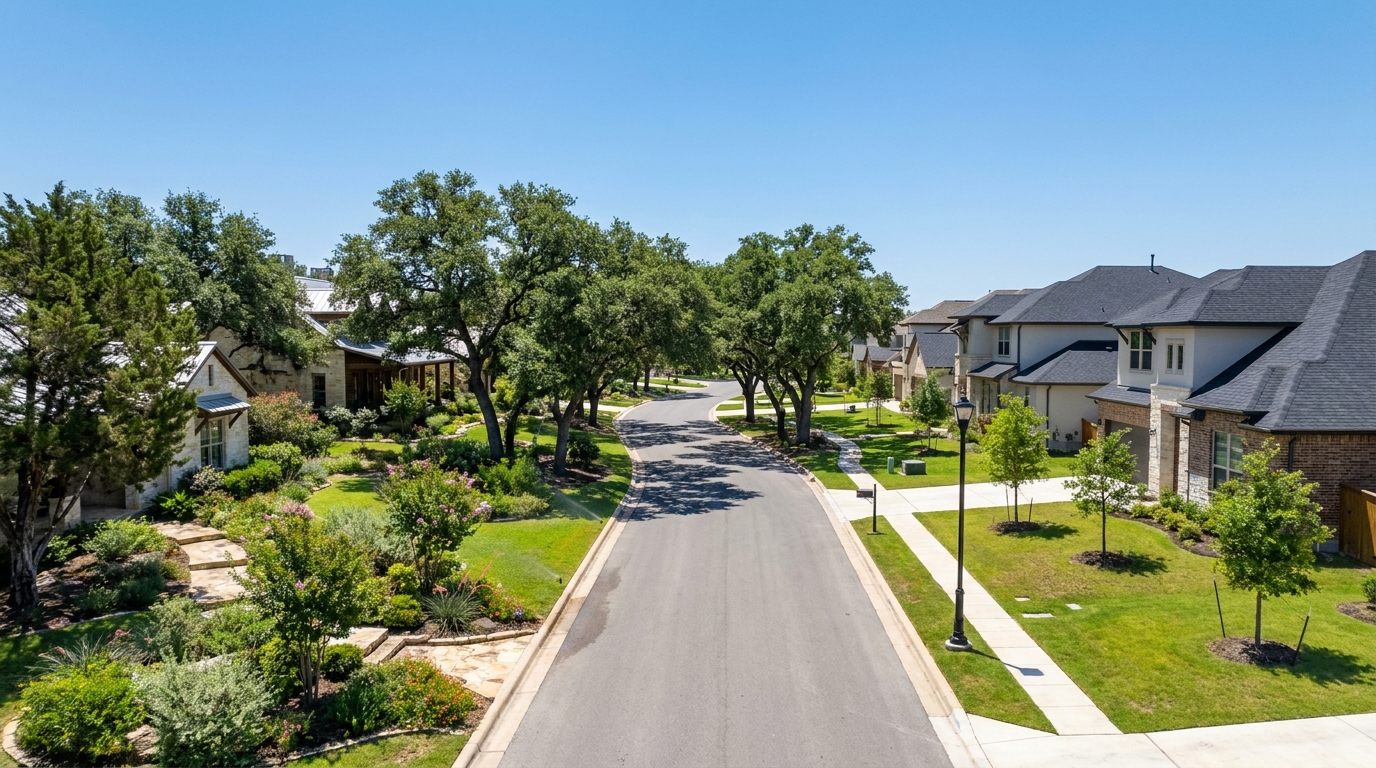
Stone Oak sits north of Loop 1604 along the US 281 corridor, inside San Antonio city limits, roughly 20 to 25 minutes from downtown. Its terrain leans into the Texas Hill Country, with rolling elevation and mature live oaks that have had two decades or more to grow in. Cibolo sits about 20 to 25 minutes northeast of downtown on the opposite side of the metro, along I-35 between San Antonio and New Braunfels, and it is its own independent city rather than a district within San Antonio. Where Stone Oak feels established and finished, much of Cibolo still feels like it is actively filling in, with new subdivisions going up on what used to be farmland.
Home prices and what you get for the money
This is the sharpest contrast between the two. Stone Oak's median sale price generally runs between $450,000 and $520,000 in 2026, with price per square foot often exceeding $175 to $210. Cibolo's median has been running closer to $400,000, with a large share of that inventory being new construction. In practical terms, a buyer's budget in Cibolo typically stretches to a larger, newer home, while the same budget in Stone Oak often buys a smaller or older property, with the premium going toward the school zone, the established landscaping, and the location inside San Antonio proper.
Schools
Both areas are served by strong districts, but the profile is different. Stone Oak falls primarily within North East ISD's Reagan Cluster, and Ronald Reagan High School was recognized in 2026 by U.S. News & World Report as the highest-ranked non-charter, non-magnet public high school in the greater San Antonio area. Cibolo is served by Schertz-Cibolo-Universal City ISD, a fast-growth district with a strong regional reputation of its own, feeding into Byron P. Steele II High School. Families chasing the single highest-ranked traditional public high school option in the metro tend to lean toward Stone Oak and Reagan; families who want a strong, well-regarded district at a lower overall cost of entry are well served by Cibolo and SCUC ISD.
Commute and daily convenience
Both communities land in a similar 20 to 25 minute range from downtown San Antonio under normal conditions, though they approach from opposite sides of the metro and each has its own rush-hour bottlenecks, US 281 and Loop 1604 for Stone Oak, I-35 for Cibolo. Where the two diverge more is day-to-day convenience. Stone Oak's retail and medical infrastructure, anchored by the Village at Stone Oak and multiple hospital systems, has had over two decades to build out, so most errands stay inside the district. Cibolo's downtown and retail base is real but still growing, and residents there more often drive into Schertz or San Antonio for a wider selection of shopping and dining.
HOA structure and property taxes
Stone Oak carries standard San Antonio city and county property tax rates, without the MUD or PID assessments that are common in Cibolo's newer master-planned subdivisions, though many of Stone Oak's gated communities do carry meaningful HOA dues tied to golf and club amenities. Cibolo's newer communities frequently sit inside a MUD or PID that adds to the annual tax bill on top of already higher Texas property tax rates, alongside their own HOA dues. Buyers should compare the full carrying cost, not just the list price, in either market, since the fee structures are different but neither one is automatically cheaper once every line item is added up.
Growth trajectory and long -term value
Stone Oak's growth story has largely already played out. It is land-constrained, mostly built out, and analysts covering the San Antonio market consistently point to established, inside-1604 neighborhoods like Stone Oak as holding value more consistently precisely because there is limited room for new competing supply. Cibolo, by contrast, is still in the middle of its growth curve, with new construction actively competing with resale inventory, which can mean more short-term price volatility but also more upside if the area's rapid growth continues. Buyers focused on stability tend to prefer Stone Oak's already-proven track record. Buyers focused on getting in early on a still-growing area tend to prefer Cibolo's momentum.
The bottom line
Choose Stone Oak if you want a top-ranked traditional public high school, an established Hill Country setting, and a location inside San Antonio with a long track record of holding value. Choose Cibolo if you want significantly more home for your budget, a larger selection of new construction, and a still-growing community where your dollar goes further today.
If Stone Oak is pulling ahead for you, our complete guide to living in Stone Oak and our roundup of the best Stone Oak neighborhoods are good next stops. If you want to see the Cibolo side of the picture, the Cibolo community page has current listings and neighborhood details.