
Latest Blog
8355 Falcon Meadow | 4-Bedroom Rental in Converse, TX
8355 FALCON MDW, Converse, TX For Lease Description Photos Marketing Your Home Real Estate Reports for Home Owners, Sellers & Buyers! Maps & Local Schools More $ CLICK FOR CURRENT PRICE 4 BEDROOMS 3 BATHROOMS

Inside Saddle Creek Ranch: Davidson Homes’ New Community in Cibolo, TX
Saddle Creek Ranch Cibolo TX | Davidson Homes New Construction If you’re searching for new construction in Cibolo, Texas, there’s a new community worth putting on your radar: Saddle Creek Ranch by Davidson Homes. I
Why the North I-35 Corridor Is One of the Fastest-Growing Areas in Texas
Why the North I-35 Corridor Is One of the Fastest-Growing Areas in Texas Texas has no shortage of fast-growing suburbs, but the North I-35 Corridor between San Antonio and New Braunfels stands out even by
Living Between San Antonio and New Braunfels: A Guide to the I-35 Corridor
Deciding to live somewhere between San Antonio and New Braunfels is really a decision to live inside one of the most active growth corridors in Texas, without committing to either city outright. That trade brings real advantages, and a few things worth understanding before you sign a lease or an offer. This guide covers what daily life actually looks like along the corridor: the commute, the job market, the schools, and how residents spend their time outside of work.
The Commute, Realistically
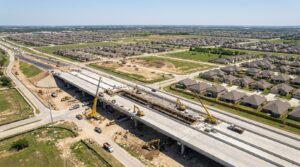
Interstate 35 is the corridor's spine, and it is also its biggest daily variable. Under normal conditions, most communities along the corridor put you somewhere between 20 and 40 minutes from downtown San Antonio, with New Braunfels at the far end and Selma and Universal City closest in. The honest complication is the ongoing I-35 Northeast Expansion, a roughly $1.5 billion TxDOT project widening about 20 miles of the highway through Bexar, Comal, and Guadalupe counties.
Construction has been active since 2022 and will continue reshaping traffic patterns for several more years, which means real commute times can run longer than a map suggests, particularly during peak hours near active work zones. The long-term payoff is meaningful added capacity, including new elevated express and HOV lanes, but residents should plan around construction delays in the near term rather than assume the corridor's roads work the way they will once the project wraps.
For buyers with flexibility, US 281 offers an alternative route toward the western side of the corridor near Garden Ridge, and many residents simply build their errands and school runs around the corridor's own retail centers rather than commuting for every trip, which cuts down on daily highway time considerably.
The Job Market Along the Corridor
This corridor is no longer purely a bedroom community for San Antonio. Distribution and logistics have become a major local employer, with Amazon and Walmart distribution centers, Sysco Central Texas, and a roughly $450 million next-generation distribution facility planned for Cibolo among the corridor's largest employers. H-E-B's Schertz operations, area healthcare systems, and Randolph Air Force Base round out a job base that gives many residents the option to work close to home rather than commuting into San Antonio every day. For workers whose jobs remain downtown or in the medical center, the corridor still functions well as a commuter base, particularly from its southern communities.
Schools Across the Corridor
One of the more important things to understand about this corridor is that it is not one school district, it is several, and the right one for your family depends heavily on which specific community and even which street you choose. Selma, Schertz, Cibolo, and Universal City are primarily served by Schertz-Cibolo-Universal City ISD, a regionally strong district known for Samuel Clemens High School's IB program and consistently solid ratings.
Converse and Live Oak fall largely within Judson ISD. Garden Ridge and New Braunfels are primarily served by Comal ISD and New Braunfels ISD, both carrying strong reputations of their own. Because attendance zones can shift even within a single subdivision, always confirm the assigned campuses for a specific address before making an offer, and see each community's own living guide for district-specific detail.
Daily Life and Weekend Recreation
Life along the corridor blends suburban convenience with genuine access to outdoor recreation, which is a big part of the draw. Communities closer to San Antonio, Selma, Universal City, Converse, and Live Oak, lean toward established retail, parks, and proximity to the city's larger amenities. The middle of the corridor, Schertz and Cibolo, has built out its own strong retail and dining base over the past decade, anchored by developments like Schertz Station.
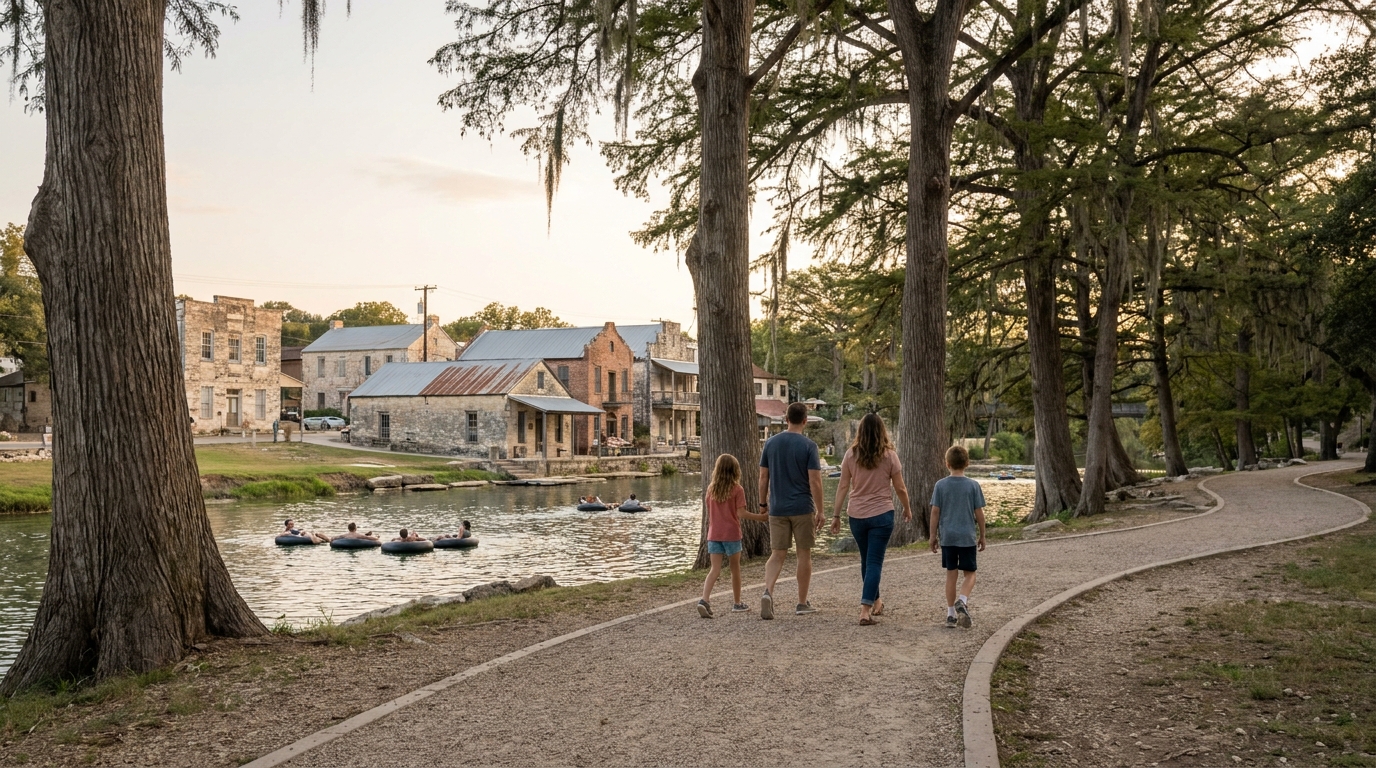
Toward the northern end, Garden Ridge and New Braunfels offer a different kind of weekend: the Comal and Guadalupe Rivers, tubing, historic downtown Gruene, and Schlitterbahn Waterpark give this stretch of the corridor a genuine tourism and recreation economy that the more purely residential communities further south do not have.
Property taxes follow the standard Texas pattern throughout the corridor: no state income tax, offset by higher property tax rates, with many of the newer master-planned communities carrying an additional MUD, WCID, or PID assessment. Always confirm the full combined rate for a specific property rather than assuming it matches a neighboring city.
Choosing Where Along the Corridor to Land
If your work is downtown or in the medical center, prioritize the southern end of the corridor for the shortest commute. If you want to work close to home in logistics, distribution, or healthcare, the corridor's own job base can support that from almost any community along it. If weekend recreation and a genuine small-city feel matter most, New Braunfels and the areas approaching it offer something the more purely residential stretches do not. Our roundup of the best communities along the corridor and our corridor overview both go deeper into matching a specific city to your priorities.