Latest Blog
8355 Falcon Meadow | 4-Bedroom Rental in Converse, TX
8355 FALCON MDW, Converse, TX For Lease Description Photos Marketing Your Home Real Estate Reports for Home Owners, Sellers & Buyers! Maps & Local Schools More $ CLICK FOR CURRENT PRICE 4 BEDROOMS 3 BATHROOMS
Inside Saddle Creek Ranch: Davidson Homes’ New Community in Cibolo, TX
Saddle Creek Ranch Cibolo TX | Davidson Homes New Construction If you’re searching for new construction in Cibolo, Texas, there’s a new community worth putting on your radar: Saddle Creek Ranch by Davidson Homes. I
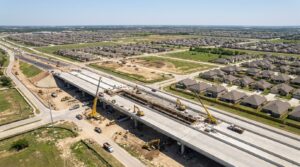
Why the North I-35 Corridor Is One of the Fastest-Growing Areas in Texas
Why the North I-35 Corridor Is One of the Fastest-Growing Areas in Texas Texas has no shortage of fast-growing suburbs, but the North I-35 Corridor between San Antonio and New Braunfels stands out even by
Living in Universal City, TX: What You Need to Know Before Moving
If you’re weighing a move to Universal City, here’s the short version: it’s a small, established city built almost entirely around Randolph Air Force Base, prized for affordable homes, a five to ten minute commute to the base gate, and a genuinely tight-knit community that treats new arrivals like neighbors from day one. The longer version, covering the current market, schools, neighborhoods, and daily life, is below, so you can decide whether Universal City fits before you start touring homes.
Where is Universal City, and why are so many people moving there?
Universal City sits in northeastern Bexar County, with a small sliver reaching into Guadalupe County, roughly fifteen miles northeast of downtown San Antonio. It shares borders with Schertz to the east, Selma to the north, Live Oak to the west, and Converse to the southwest, and the whole city covers just 5.7 square miles, small enough that almost any address is a five to ten-minute drive from any other.
The city exists because of the base next door. Land here was first platted in 1929, when a group of San Antonio doctors bet that a town springing up across the railroad tracks from a new military airfield would draw both residents and businesses. That airfield became Randolph Field, opening in 1931, and Pat Booker Road, the city’s main commercial spine, was built in 1935 to connect I-35 to Randolph’s main gate.
Universal City incorporated as its own home-rule city in 1960, and growth exploded soon after, when Air Training Command headquarters relocated to Randolph in 1957. The population went from a few hundred residents to over 7,600 by 1970. Today it sits at 19,720 as of the 2020 census, with a median resident age of 37.7, and the city has long been estimated to be roughly 90 percent active-duty or retired military households.
What sets Universal City apart from newer master-planned suburbs nearby is its age and its density. Lots here were platted decades ago, so homes sit closer together on smaller footprints than what you’ll find in Cibolo or Schertz. That translates directly into price, which is exactly why Universal City remains one of the more affordable entry points into the northeast San Antonio market and continues to draw a steady stream of first-time buyers, young military families, and investors.
The Universal City housing market in 2026
As of mid-2026, home values in Universal City generally fall between the high $260,000s and the low $320,000s depending on the data source and the specific pocket of the city, with the median sale price hovering around $300,000 and price per square foot typically running in the mid $150s, well below the broader San Antonio average. That gap is a big part of the appeal for buyers who want ownership without stretching their budget.
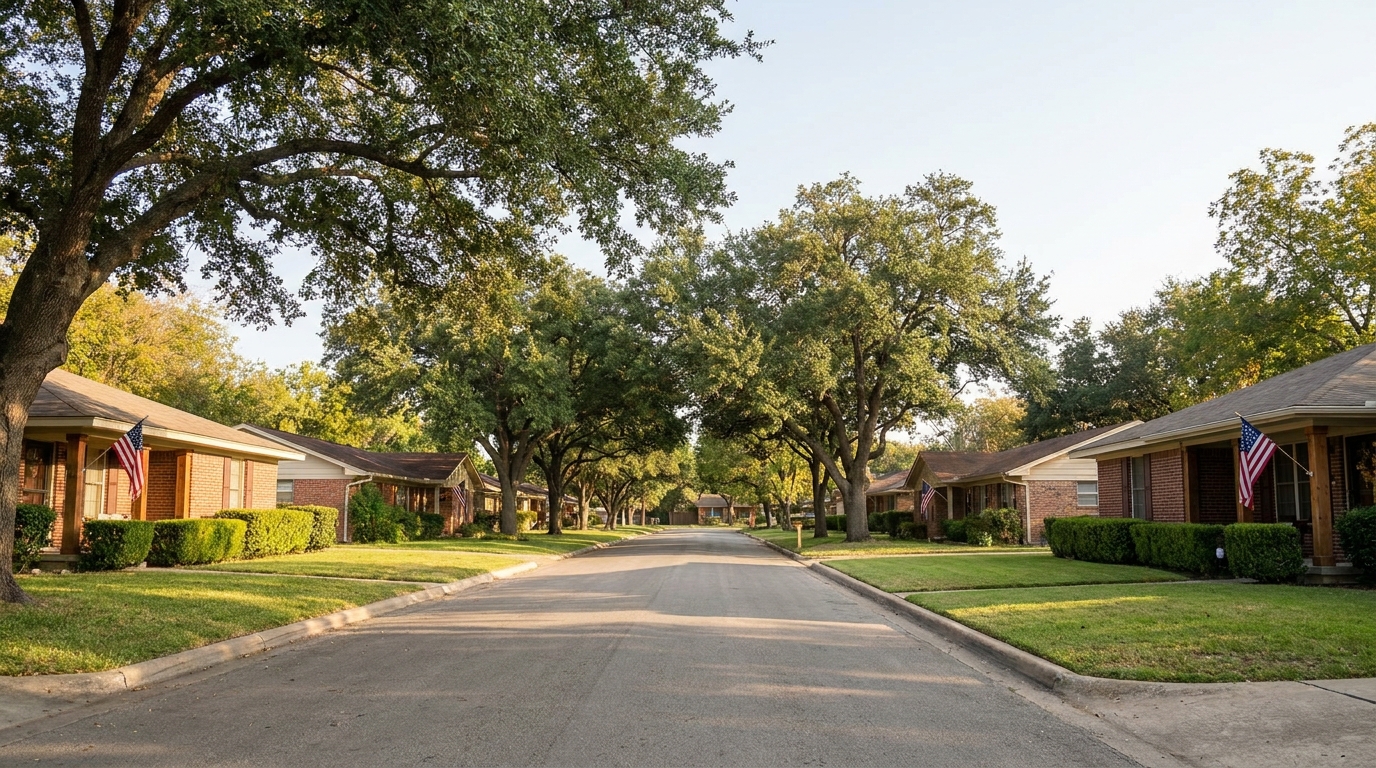
The housing stock is a mix of 1960s and 1970s brick ranch homes in established neighborhoods like Coronado Village and Rose Garden, alongside newer infill construction and the more upscale Olympia Hills area, where homes overlooking the municipal golf course can run from the mid $300,000s to the mid $500,000s. Most of the city carries no HOA at all, which keeps monthly costs predictable, though a handful of newer developments do have voluntary or mandatory associations.
Right now the market gives buyers more room to negotiate than it has in recent years. Homes in the area have been sitting on the market close to three months on average, up from just over two months a year earlier, and price per square foot has softened slightly year over year. Because so much of the buyer pool is connected to Randolph AFB, either permanently stationed or rotating through flight training, the rental market stays consistently strong, with median rents around $1,500, which gives owner-occupants a reliable fallback if military orders eventually take them elsewhere.
A quick word on taxes. Texas has no state income tax but makes up for it with higher property taxes, and buyers should always confirm the full combined rate, city, county, and school district, for a specific address rather than assuming it matches a neighboring city, and ask about the homestead exemption. The Bexar County Appraisal District (or Guadalupe County, for the small sliver that falls there) is the source of truth for any specific property.
Schools: two districts serve Universal City
Universal City is unusual in that it is split between two school districts. The larger share of the city falls under Schertz-Cibolo-Universal City ISD, commonly known as SCUC ISD, one of the strongest-rated districts in the region, with students typically zoned to Samuel Clemens High School. A smaller portion of the city, generally on the western side, falls under Judson ISD instead. Because zoning can vary block by block, buyers should always confirm the exact district and campus assignment for a specific address before writing an offer.
SCUC ISD serves close to 15,000 students across the district and has earned solid marks for its academic programs, along with a close working relationship with Randolph AFB that includes Purple Star campuses recognized for supporting military-connected students who transfer mid-year, a common occurrence in a base community like this one. Northeast Lakeview College, part of the Alamo Colleges District, sits on shared land between Universal City and Live Oak and gives residents an affordable option for continuing education close to home.
Daily life: amenities, dining, and things to do
Pat Booker Road is the commercial heart of Universal City, and it has gone through a genuine revitalization in recent years, with improved sidewalks, updated landscaping, and a mix of long-running local spots and national chains. La Fiesta Patio Cafe and Noy’s Bistro are neighborhood favorites, and the food scene along the corridor reflects the base’s international footprint, from German bakeries paying tribute to Randolph’s history to strong street taco spots and Vietnamese restaurants.
Universal City also keeps its military identity front and center. The city has earned recognition as a Purple Heart City, and its two signature annual events, a Snowfest each February and a Veterans Day parade every November, draw residents out in a way that reinforces just how tied the community is to the base next door. For anything beyond the essentials, downtown San Antonio, the River Walk, and Six Flags Fiesta Texas are all a short drive away.
It is worth being honest about the tradeoffs, too. Universal City is a car-dependent suburb like most of its neighbors, and because it sits directly beside an active training base, training aircraft passing overhead is a near-daily fact of life. Most residents, especially those connected to the base, describe it as background noise rather than a drawback, but it is worth experiencing firsthand before you buy.
Who Universal City is best for
Universal City tends to fit first-time buyers who want a starter home without a long commute, military families who want to live close to Randolph AFB, and investors drawn to the strength of the rental market. It suits people who value practicality and community over square footage and new-construction finishes. If you want a brand-new build on a half-acre lot, you will likely find better options in Cibolo or Marion. If you want an affordable, established home with a short drive to the base and easy access to the rest of San Antonio, Universal City is hard to beat.
You can explore listings, neighborhood details, and current market activity any time on our Universal City community page. And if you are torn between Universal City and its next-door neighbor, our Universal City vs Schertz comparison breaks down how the two stack up.