
Latest Blog
8355 Falcon Meadow | 4-Bedroom Rental in Converse, TX
8355 FALCON MDW, Converse, TX For Lease Description Photos Marketing Your Home Real Estate Reports for Home Owners, Sellers & Buyers! Maps & Local Schools More $ CLICK FOR CURRENT PRICE 4 BEDROOMS 3 BATHROOMS

Inside Saddle Creek Ranch: Davidson Homes’ New Community in Cibolo, TX
Saddle Creek Ranch Cibolo TX | Davidson Homes New Construction If you’re searching for new construction in Cibolo, Texas, there’s a new community worth putting on your radar: Saddle Creek Ranch by Davidson Homes. I

Why the North I-35 Corridor Is One of the Fastest-Growing Areas in Texas
Why the North I-35 Corridor Is One of the Fastest-Growing Areas in Texas Texas has no shortage of fast-growing suburbs, but the North I-35 Corridor between San Antonio and New Braunfels stands out even by
New Braunfels vs San Antonio: Which Lifestyle Fits You Best?
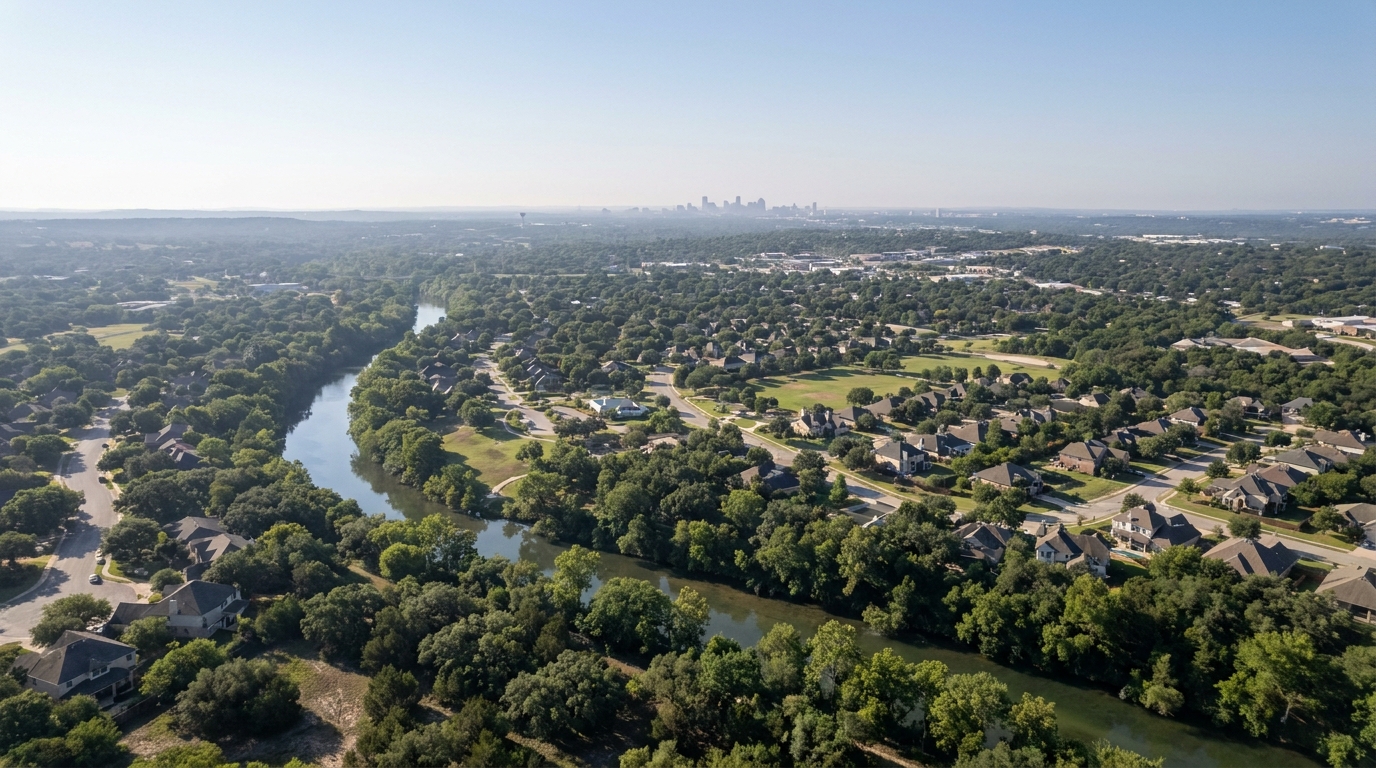
If you are relocating to the area or just trying to figure out where to plant roots, this is one of the most common matchups buyers weigh. New Braunfels and San Antonio sit only about 30 to 35 minutes apart on Interstate 35, they share the same metro, and plenty of people commute between them every day. On paper they can feel like alternatives to the same question. In person they could hardly be more different, and the right one for you comes down to what you want your daily life to look like.
Here is the quick take. San Antonio is a major American city, the second largest in Texas, with a deep job market, an international airport, a lower median home price, and the full range of big city culture and amenities. New Braunfels is a fast growing Hill Country town with clear rivers, a strong small town identity, a slightly higher median price, and a lifestyle built around the outdoors. Neither is better. They are simply built for different priorities.
At a glance
Big city versus Hill Country town
This is the heart of the difference. San Antonio gives you everything a major city does, from professional sports and a symphony to a constant calendar of festivals, an enormous range of restaurants, and neighborhoods for every budget and style.
If you want walkable urban districts, nightlife, and the energy of a big metro, San Antonio simply has more of it. New Braunfels trades that scale for setting. You wake up in the Hill Country, the rivers are minutes away, and the town keeps a distinct small city identity even as it grows. For a lot of buyers, that quieter, outdoor centered pace is the entire reason they make the move.
Home prices and what you get
Both cities pull from overlapping buyer pools, but the value equation differs. San Antonio's median sale price has been running lower, often in the high $200,000s, and the sheer size of the market means a huge spread of options, from affordable starter neighborhoods to luxury enclaves. New Braunfels has been running in the mid to high $300,000s, reflecting its Hill Country location, river access, and a large share of newer construction.
What you are buying in New Braunfels is often the setting itself, the trees, the terrain, and proximity to the water, while San Antonio offers a lower entry point and more sheer variety of neighborhoods and price tiers. Both are still far more affordable than Austin to the north.
Jobs and commute
San Antonio is one of the largest employment centers in the state, home to major employers in insurance, finance, energy, healthcare, advanced manufacturing, and the military, along with San Antonio International Airport. If your job is in the city core or you value being minutes from a major airport, that weighs toward San Antonio. New Braunfels has its own growing economy in healthcare, manufacturing, distribution, retail, and tourism, and its real superpower is location.
From New Braunfels you can reach the San Antonio job market to the south and the Austin job market to the north, which is why so many corridor commuters choose it. The shared downside is the same for both, the ongoing Interstate 35 expansion brings construction and slowdowns, so whichever you choose, test your real commute at the time you would actually be driving it.
Schools
San Antonio is served by more than a dozen school districts, including some highly regarded ones, plus a wide range of magnet, charter, and private options. That variety can be a real advantage, but it also means the quality and feel can swing a lot from one part of the city to another, so the district and campus matter enormously.
New Braunfels keeps it simpler, with two districts, New Braunfels ISD and Comal ISD, both well regarded. The catch in New Braunfels is that the two districts split the city and the assignment depends on the exact address, so families should confirm the campus before buying in either place.
Lifestyle, recreation, and culture
San Antonio brings world class attractions, the River Walk, the Alamo and the historic missions, the Pearl District, professional basketball, and a dining scene with serious depth and diversity. New Braunfels answers with a different kind of recreation, built around the spring fed Comal and Guadalupe rivers, the famous Schlitterbahn waterpark, live music and shopping in the Gruene Historic District, Canyon Lake, and a German heritage that fills the calendar with events like Wurstfest. One city is about the richness of urban culture, the other is about getting outside. Many families end up enjoying both, since they are so close together.
Cost of living, taxes, and long term value
Both cities sit in a state with no income tax and correspondingly higher property taxes, and in both you should compare the full tax rate on a specific home rather than assuming the two are identical. New Braunfels in particular has many newer master planned communities that carry a MUD or PID, which adds to the annual bill, so the special district picture deserves a close look.
On cost of living, San Antonio generally runs a bit lower, helped by lower home prices, while New Braunfels carries a modest premium for its setting. On long term value, both have benefited from steady demand and population growth along the corridor, so neither is a risky bet, and New Braunfels in particular has been one of the fastest growing cities in the country for years running.
The bottom line
Choose San Antonio if you want a major city with the deepest job market, the widest range of neighborhoods and price points, a lower entry price, an international airport, and full big city culture and amenities.
Choose New Braunfels if you want Hill Country scenery, clear rivers minutes from your door, a strong small town feel, and easy access to both San Antonio and Austin, and you do not mind a slightly higher price or a commute into the city.